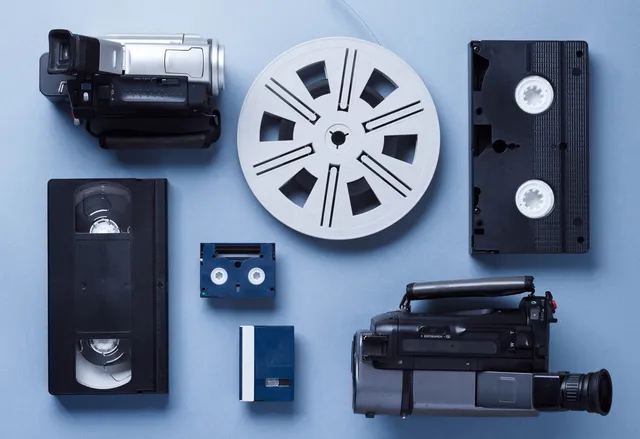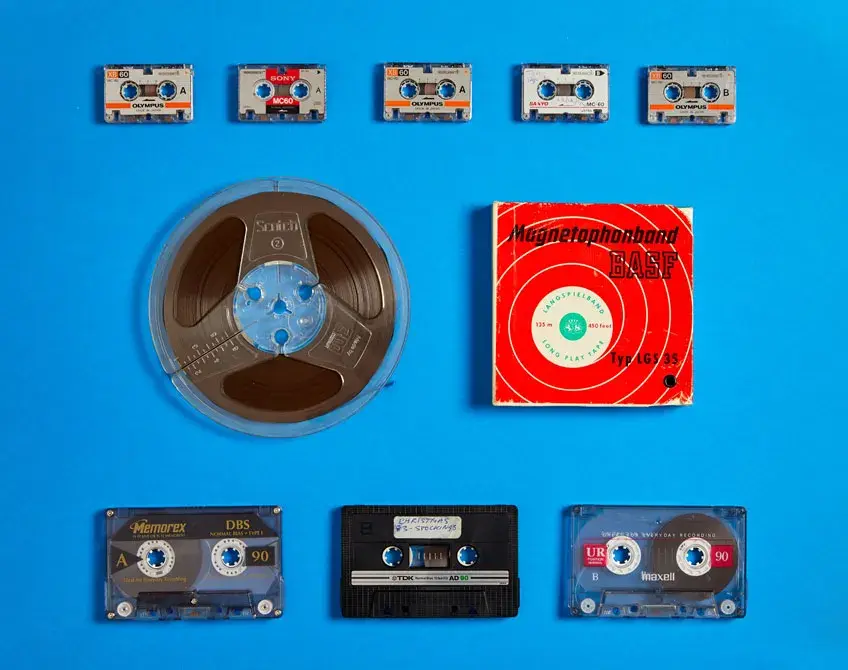
Every 10 seconds, somewhere in Australia, another hour of irreplaceable family history quietly degrades in a cardboard box. Across our nation, an estimated 500 million hours of memories remain trapped on fragile magnetic tapes—VHS, Hi8, audio cassettes—that are steadily decaying toward obsolescence. This isn’t just about outdated technology; it’s a race against chemical decay, equipment extinction, and the inevitable fading of our most precious visual histories. The window to preserve these memories is closing faster than most people realize.
The Hidden Chemistry of Decay
Unlike sturdy photo albums, magnetic tapes suffer from a fundamental instability. The plastic backing slowly becomes brittle, while the oxide particles that store your visual information literally flake away. Dr. Susan Thompson, a media preservation specialist, explains: “Tapes have a shelf life of 15-30 years under ideal conditions, but most home storage accelerates deterioration. Heat, humidity, and even the earth’s magnetic fields gradually erase your footage.” This isn’t a gradual decline—it’s often a sudden failure where one day the tape simply won’t play, or the image dissolves into colorful static.
Perhaps more urgent than tape decay is the rapid disappearance of playback technology. Where would you find a working Video8 camcorder today? How many repair shops still fix VCR mechanisms? These devices aren’t just collecting dust in stores—they’re vanishing from existence. The technicians who understand their mechanics are retiring, and replacement parts are no longer manufactured. When the last working VCR fails, every tape becomes a locked box with a thrown-away key.
Beyond Nostalgia: What’s Really at Stake
Consider what you might lose forever:
- Your grandparents’ voices telling stories in their own accents and cadences
- Your children’s first unsteady steps and garbled words
- Wedding days where loved ones now departed laughed and danced
- Cultural traditions and family gatherings that defined your heritage
These aren’t replaceable memories. Unlike photos, video captures movement, personality, and context in ways that still images cannot. The loss isn’t just personal—it’s historical. As families disperse and generations pass, these tapes become the only bridge between past and future.
The Modern Preservation Solution
Professional conversion services like Tapes To Digital solve this crisis with surprisingly sophisticated technology. The process begins with forensic-level cleaning of each tape, removing decades of dust and oxide shedding that can damage playback heads. Specialized equipment then reads the analog signals with precision that consumer-grade devices cannot match.
The digital transfer process captures footage at optimal resolution, often revealing details that have become invisible on degraded tapes. Advanced software can perform “digital remastering”—stabilizing shaky footage, correcting colour shifts that occurred over decades, and reducing the persistent background hiss from old audio recordings. This isn’t simply copying; it’s actively rescuing content from the brink of loss.
For damaged media, professional services employ techniques most consumers never see. Broken tapes can be spliced, mould can be carefully cleaned without damaging the oxide layer, and stretched sections can be compensated for during playback. These interventions happen before conversion begins, ensuring maximum content recovery.
The Digital Advantage: More Than Just Preservation
Once converted, your memories gain capabilities they never had in analog form:
Universal Access: Your wedding video plays equally well on a smartphone in Perth, a tablet in Brisbane, and a smart TV in Adelaide—simultaneously.
Future-Proof Security: Digital files maintain perfect quality through infinite copying. Store them on multiple hard drives, cloud services, and with family members worldwide.
Creative Potential: Edit highlights for anniversary parties, extract audio clips for voice memorials, or create digital family albums that combine photos, video, and documents.
Space Reclamation: That entire cupboard of tapes becomes a single USB drive or cloud folder, freeing physical space while actually increasing accessibility.
Why Professional Conversion Matters
While DIY solutions exist, they often deliver disappointing results. Consumer capture devices frequently miss subtle colour information, introduce digital artifacts, and struggle with inconsistent playback from aging tapes. More critically, they provide no recovery options when tapes jam or break during playback—a moment that could mean permanent loss.
Professional services offer insurance through expertise. Companies like Tapes To Digital have transferred over 10 million memories, developing techniques for every tape format and degradation scenario. Their industrial equipment handles fragile media gently but precisely, and their technicians know exactly how to optimize transfers for each format’s peculiarities.
Perhaps most importantly, professional services provide handling security. Your irreplaceable originals travel in protective packaging, undergo careful inspection, and receive individual attention throughout the conversion process. For many families, these tapes represent their only copy of pivotal moments—entrusting them requires confidence in both technology and human care.
The Time Factor: An Immediate Priority
The conversion timeline has become urgent for two reasons beyond tape decay. First, the remaining functional playback equipment is disappearing exponentially. Second, the generation who understands what’s on these tapes—who can identify people, places, and occasions—is aging. Context disappears when those memories fade.
The process itself has become remarkably streamlined. Services typically offer mail-in options across Australia, with clear timelines and progress tracking. For larger collections, some providers even offer pickup services in major metropolitan areas.
Don’t let chemical decay decide which memories survive. Those tapes in your closet aren’t just aging—they’re actively deteriorating with each seasonal temperature cycle. What seems like a preservation project for “someday” has quietly become an emergency intervention.
Every family’s story deserves more than a slow fade to black. The technology exists today to rescue these memories, enhance their quality, and deliver them in formats your grandchildren will still access decades from now. The choice isn’t between preserving memories or not—it’s between acting now while conversion remains possible, or regretting later when the opportunity has chemically expired.
Begin preserving your family’s visual legacy today at Tapes To Digital—before another generation of memories becomes unwatchable.