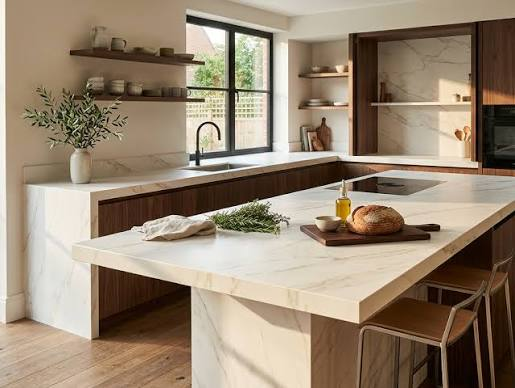
Kitchen countertops play an important role in both the functionality and appearance of a modern home. Homeowners want surfaces that look attractive, withstand everyday use, and remain easy to maintain over time. Sintered Stone Kitchen Countertops for Residential Projects have become an increasingly popular option because they combine durability, contemporary design, and practical performance.
Sintered stone is an engineered surface produced by compacting and heating carefully selected natural minerals under extremely high pressure and temperature. This manufacturing process creates a dense, durable material that can be used for kitchen worktops, islands, backsplashes, and other residential applications.
What Is Sintered Stone?
Sintered stone is made primarily from natural mineral materials. During production, these materials are compressed and exposed to intense heat, creating a solid surface with characteristics that make it suitable for demanding environments.
Unlike some traditional countertop materials, sintered stone does not rely on a resin-based structure. Its manufacturing process is designed to replicate geological processes while accelerating them considerably. The result is a hard, dense surface available in a wide range of colors, patterns, and finishes.
For residential kitchens, this combination of strength and design flexibility makes sintered stone an appealing countertop choice.
Why Choose Sintered Stone Kitchen Countertops?
There are several reasons homeowners and designers consider sintered stone for kitchen renovations and new residential projects.
Excellent Durability
Kitchen countertops experience frequent use. From preparing meals to placing hot cookware and cleaning spills, the surface needs to handle everyday activity.
Sintered stone is highly durable and resistant to many common forms of wear. Its dense composition can help it withstand scratches, impacts, and general kitchen activity when properly installed and maintained.
This makes it particularly useful for busy households where countertops need to perform reliably every day.
Resistance to Heat
Cooking areas regularly come into contact with heat. Hot pans, baking trays, and cookware can create concerns for certain countertop materials.
Sintered stone has strong heat-resistant properties, making it a practical choice around cooking areas. Nevertheless, using appropriate trivets or protective pads is still a good practice, especially with extremely hot cookware, because installation conditions and surrounding materials can affect performance.
Low Maintenance
Homeowners often want a countertop that does not require complicated maintenance. Sintered stone is relatively easy to clean because its surface is dense and non-porous.
Routine cleaning can generally be handled with a soft cloth, water, and a suitable mild household cleaner. Regular maintenance helps preserve the appearance of the countertop without requiring extensive sealing routines associated with some natural stone surfaces.
Stain Resistance
Kitchen surfaces are exposed to coffee, sauces, oils, juices, and other substances that can leave marks. The low porosity of sintered stone helps reduce the absorption of many common household liquids.
This makes it an attractive option for families who want a countertop that maintains a clean appearance while requiring straightforward daily care.
Design Options for Modern Kitchens
One of the biggest advantages of sintered stone is its design versatility. Residential countertops can be selected to complement almost any interior style.
Manufacturers offer surfaces inspired by natural marble, granite, concrete, limestone, and other materials. Options can include subtle neutral shades, dramatic veining, matte finishes, polished appearances, and minimalist patterns.
For a modern kitchen, homeowners may choose a simple white or gray surface. For a more traditional interior, a stone-inspired pattern can provide warmth and visual character.
Large-format slabs can also help create a cleaner appearance by reducing the number of visible joints, depending on the project dimensions and installation requirements.
Sintered Stone Kitchen Islands
Kitchen islands are often the centerpiece of residential kitchens, making countertop selection particularly important. Sintered stone can be used to create an attractive island surface that combines functionality with a strong visual presence.
A large island may serve several purposes, including food preparation, casual dining, storage, and socializing. Because of this, the countertop needs to accommodate frequent activity.
A carefully selected sintered stone design can make the island a focal point while coordinating with cabinets, flooring, lighting, and backsplashes.
Suitable for Different Residential Styles
Sintered stone countertops can work well in a variety of residential designs.
In contemporary homes, minimalist surfaces with simple patterns can complement sleek cabinetry and modern appliances. In traditional kitchens, marble-inspired designs can create a more classic appearance.
For industrial-inspired interiors, concrete-look finishes may provide an appropriate aesthetic. Meanwhile, warm neutral patterns can work well in transitional and farmhouse-style kitchens.
This flexibility allows homeowners to focus on their preferred interior style without sacrificing practical countertop performance.
Installation Considerations
Although sintered stone is durable, professional installation is important. Slab dimensions, thickness, cabinet support, cutouts, edges, seams, and transportation all need to be carefully considered.
Kitchen countertops often require openings for sinks, cooktops, faucets, and other fixtures. These areas should be measured and fabricated accurately to reduce installation problems.
Because sintered stone is a dense material, fabricators need suitable tools and experience to cut and finish the slabs correctly. Working with an experienced countertop professional can help ensure that the finished installation looks attractive and performs as intended.
Choosing the Right Finish and Color
Selecting the right sintered stone design involves more than choosing a color that looks attractive in a showroom. Homeowners should consider the entire kitchen.
Cabinet color, wall finishes, flooring, appliances, natural lighting, and hardware can all influence how a countertop appears.
Lighter surfaces can create a bright and open feeling, while darker designs may add contrast and visual depth. Marble-inspired veining can introduce decorative character, whereas solid colors can create a more understated appearance.
It is also helpful to view physical samples under the actual lighting conditions of the kitchen before making a final decision.
Sintered Stone Compared With Other Countertop Materials
Residential kitchens have many countertop choices, including natural stone, quartz, porcelain, solid surfaces, and laminate.
Sintered stone stands out because of its combination of mineral composition, durability, low porosity, heat resistance, and design variety. However, every material has its own advantages and limitations.
The best choice depends on the homeowner’s budget, design preferences, intended use, maintenance expectations, and installation requirements. Comparing samples and specifications from reputable suppliers can help homeowners make a more informed decision.
Long-Term Value for Residential Projects
A kitchen countertop is an investment that homeowners expect to use for many years. Selecting a durable material can contribute to the long-term usability and appearance of the kitchen.
Sintered stone’s resistance to everyday wear and relatively simple maintenance can make it a practical long-term option. Its extensive design selection also means homeowners can choose a surface that complements their interior rather than treating the countertop as purely functional.
For renovation projects, replacing an outdated countertop with sintered stone can significantly change the overall appearance of a kitchen without necessarily requiring a complete redesign.
Conclusion
Sintered stone kitchen countertops for residential projects offer an appealing combination of durability, low maintenance, heat resistance, stain resistance, and modern design possibilities. From kitchen islands and food preparation areas to backsplashes and coordinated surfaces, sintered stone can provide both practical performance and visual appeal.
Homeowners considering this material should evaluate slab designs, finishes, thicknesses, installation requirements, and overall kitchen style before making a decision. With proper fabrication and professional installation, sintered stone can be a strong choice for creating a durable and attractive residential kitchen that is designed for everyday living.