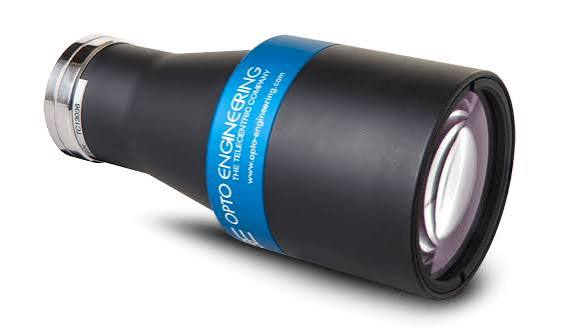
A telecentric lens C mount is a specialized optical solution designed for applications that require accurate, consistent, and distortion-free imaging. These telecentric lens c mount lenses are widely used in machine vision, industrial inspection, measurement systems, and automated quality-control equipment. The combination of telecentric optical design and a C-mount interface makes them suitable for cameras that need reliable dimensional accuracy.
What Is a Telecentric Lens?
A telecentric lens is designed so that the chief rays of light remain parallel to the optical axis on one or both sides of the lens. This unique design minimizes perspective errors that commonly occur with standard lenses. As a result, objects can appear at nearly the same size even when their position changes slightly along the optical axis.
This characteristic is especially valuable when precise measurements are required. For example, manufacturers can use telecentric imaging to inspect the diameter, width, height, or position of machine components without significant measurement errors caused by perspective.
Understanding the C Mount
The C mount is a common camera lens mounting system used in industrial cameras, machine vision systems, microscopes, and other imaging equipment. It typically uses a standardized threaded connection, allowing compatible lenses to be securely attached to cameras.
A telecentric lens with a C mount provides the advantage of combining precision optics with a widely used camera interface. Before selecting a lens, users should confirm that their camera supports the C-mount specification and that the sensor size is compatible with the lens’s optical coverage.
Benefits of a Telecentric Lens C Mount
One of the biggest benefits of a telecentric lens is improved measurement accuracy. Conventional lenses can make objects appear larger or smaller depending on their distance from the camera. Telecentric lenses greatly reduce this effect, making them useful for dimensional inspection.
Another advantage is reduced optical distortion. Straight edges and critical features can be reproduced more accurately, which is important in automated inspection applications.
Telecentric lenses can also provide consistent image quality across the field of view. This makes them useful for inspecting manufactured parts where even small dimensional differences may be important.
Common Applications
Telecentric C-mount lenses are frequently used in industrial automation and machine vision. They can be found in applications such as semiconductor inspection, electronics manufacturing, mechanical component measurement, packaging inspection, and laboratory imaging.
They are also useful for detecting defects and verifying product dimensions. In automated production environments, a camera equipped with a telecentric lens can capture consistent images that software can analyze for quality-control purposes.
Choosing the Right Lens
When selecting a telecentric lens C mount, several factors should be considered. The camera sensor size is important because the lens needs to provide sufficient image coverage. Working distance, field of view, magnification, and resolution should also match the requirements of the inspection system.
Lighting is another important consideration. Even an excellent telecentric lens may not produce reliable inspection results if the subject is poorly illuminated. Proper lighting combined with suitable optics can significantly improve image consistency.
Conclusion
A telecentric lens C mount is an excellent choice for precision imaging where accurate measurements, low perspective distortion, and consistent image reproduction are important. Its telecentric optical design helps maintain object size and improve measurement reliability, while the C-mount interface provides compatibility with many industrial cameras. By considering sensor size, magnification, working distance, resolution, and lighting requirements, users can select an optical solution that supports dependable machine vision and inspection performance.